
T1 Departure ICONS
Transforming Airports with Unmissable Brand Experiences

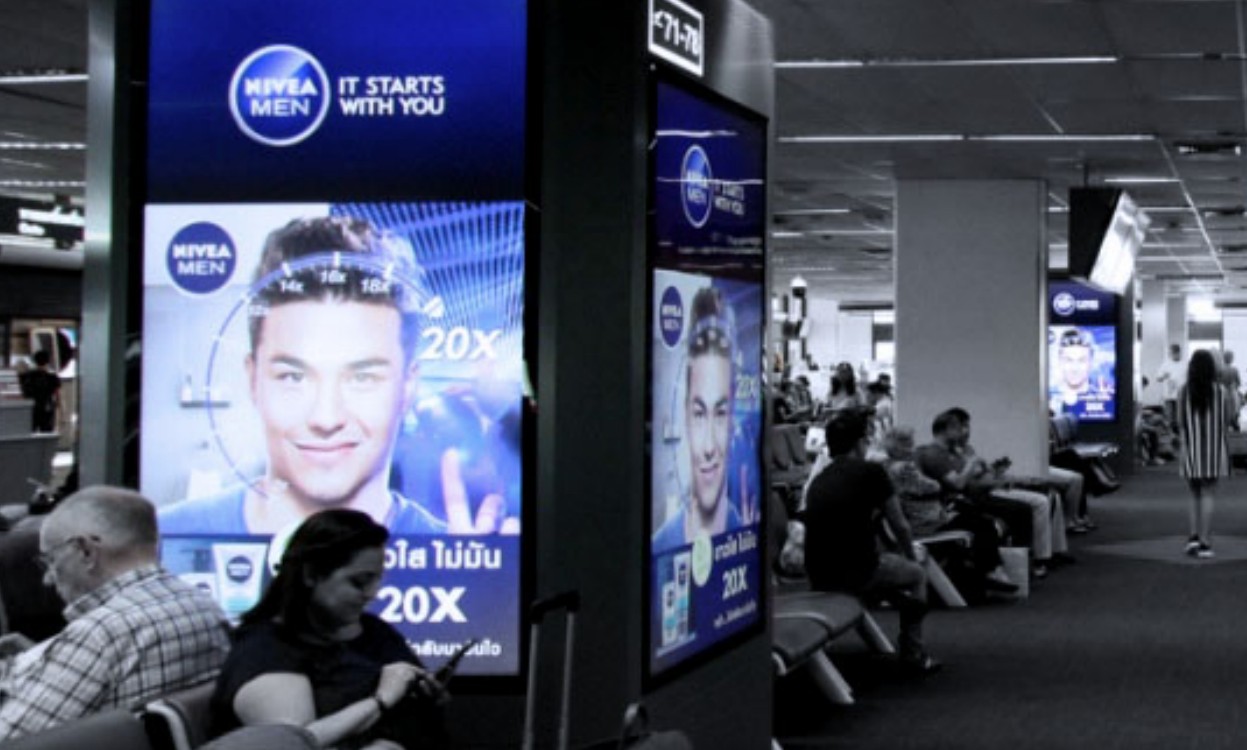
Malaysia Airport Advertising
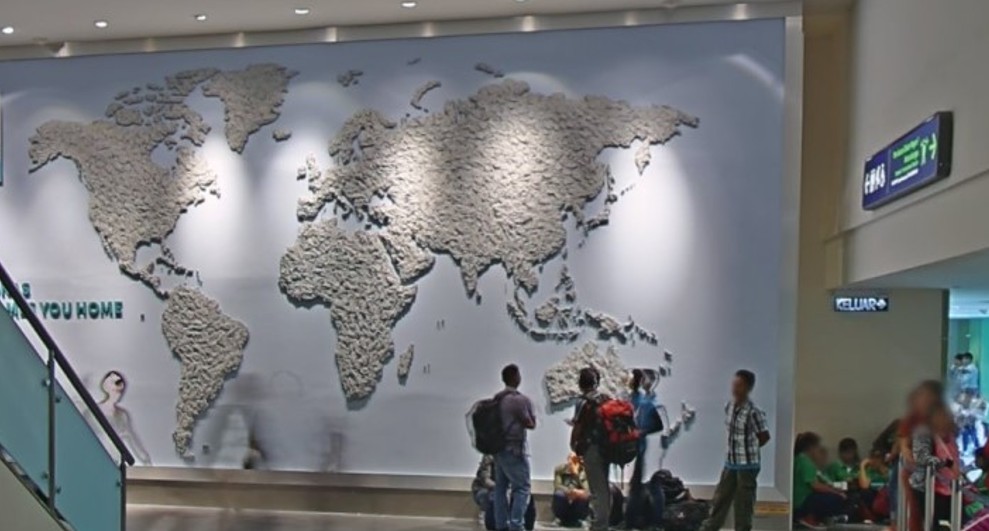
Innovative Airport Art Installation
This innovative airport installation represents world’s first art-based campaign transforming terminal spaces into immersive brand experiences. PETRONAS commissioned this stunning three-dimensional world map installation crafted from textured materials creating tactile visual impact. The “You Home” messaging connects travelers emotionally with the brand while celebrating global connectivity and shared humanity.
The installation strategically positioned in high-traffic airport areas captures passenger attention during critical decision-making moments. By integrating artistic expression with brand messaging, PETRONAS demonstrates how creative installations transcend traditional advertising, creating memorable experiences that resonate with diverse international audiences.
This groundbreaking approach combines cultural relevance, visual storytelling, and emotional engagement—setting new standards for airport advertising and proving that authentic art can powerfully communicate brand values while enriching passenger experiences simultaneously.
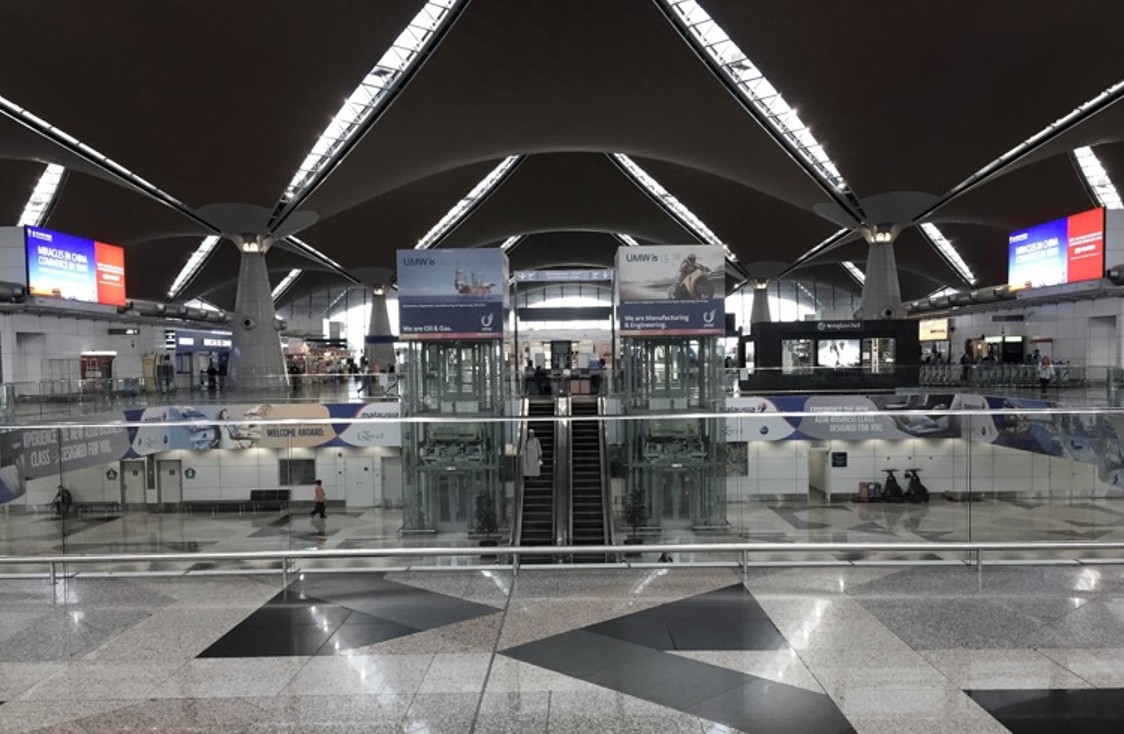
KLIA: Key Facts and Figures
01: Malaysia's Number 1 Airport Delivering
- ✓ 60% of flyers in Malaysia utilise this airport
- ✓ Dominant market position establishing clear leadership
- ✓ Highest passenger volumes across Malaysian aviation industry
- ✓ Primary gateway status for domestic and international travel
- ✓ Essential infrastructure serving majority of Malaysian travellers
02: 92.3 Million Passengers (2025)
- ✓ Record passenger volumes demonstrating market dominance
- ✓ Exponential growth trajectory exceeding previous years significantly
- ✓ Major aviation hub status within Asia-Pacific region
- ✓ Sustained traffic increases driven by economic expansion
- ✓ Peak capacity utilization supporting regional connectivity demands
03: South East Asia's Fastest Growing Airport +11%
- ✓ Highest growth rate across Southeast Asian aviation markets
- ✓ 11% year-on-year expansion outpacing regional competitors
- ✓ Strategic positioning advantage capturing regional traffic growth
- ✓ Infrastructure investment success supporting rapid expansion capabilities
- ✓ Market leadership momentum establishing dominant regional presence
04: The World's Busiest International Route KLIA to ChangI
- ✓ Global record status for international flight frequency
- ✓ KLIA-Changi connectivity driving massive passenger volumes
- ✓ Regional hub dominance connecting major Southeast Asian centres
- ✓ Peak flight frequency operating multiple daily departures
- ✓ Essential trade corridor supporting regional commerce and tourism
05: Potential High Capacity 140 Million Passengers
- ✓ Expansion capability potential reaching 140 million annual capacity
- ✓ Infrastructure scalability supporting significant growth accommodation
- ✓ Future-ready positioning preparing for sustained demand increases
- ✓ Terminal expansion plans enabling passenger volume growth
- ✓ Strategic infrastructure investment supporting long-term capacity development
06: 6th Busiest Destination For Chinese Travellers
- ✓ Top Chinese visitor destination establishing cultural bridge
- ✓ Sixth position globally among preferred Chinese travel markets
- ✓ Growing Chinese tourism driving international passenger growth
- ✓ Premium leisure market access targeting affluent Asian demographics
- ✓ Cultural tourism appeal attracting repeat Chinese visitor volumes
07: KLIA 2 The World's Largest Terminal Built for LCC
- ✓ Record-breaking terminal scale exclusively designed for low-cost carriers
- ✓ Architectural innovation achievement supporting massive passenger throughput
- ✓ Cost efficiency optimization enabling affordable air travel expansion
- ✓ Capacity leadership status accommodating 45 million+ annual passengers
- ✓ Industry benchmark standard setting global LCC terminal precedents
08: KLIA 2 The World's Third Best Low Cost Terminal (Skytrax World Airport Awards)
- ✓ Global recognition achievement ranking third worldwide for LCC terminals
- ✓ Skytrax award validation confirming world-class service standards
- ✓ International quality benchmark competing with premium global terminals
- ✓ Operational excellence achievement delivering exceptional passenger experience
- ✓ Industry leadership position setting superior LCC terminal standards globally
KLIA T1 ARRIVALS ROUTE

KLIA T1 & T2 Airport Advertising
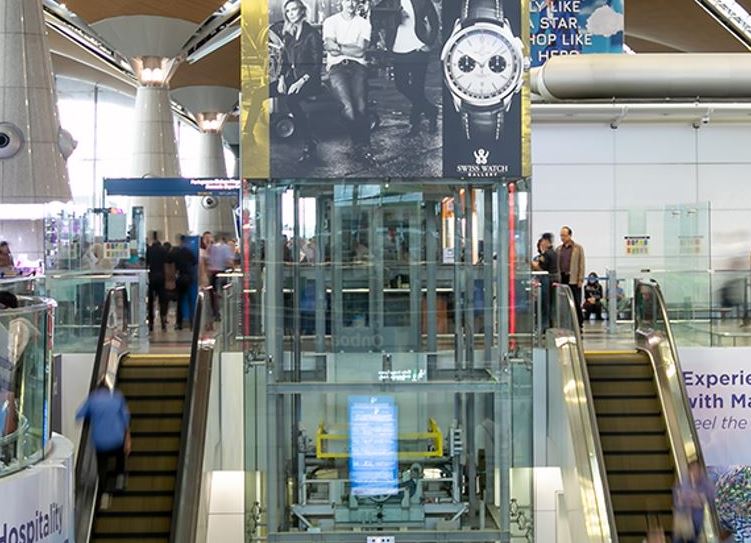
KLIA(T1) Contact Pier Lift Shaft Wraps
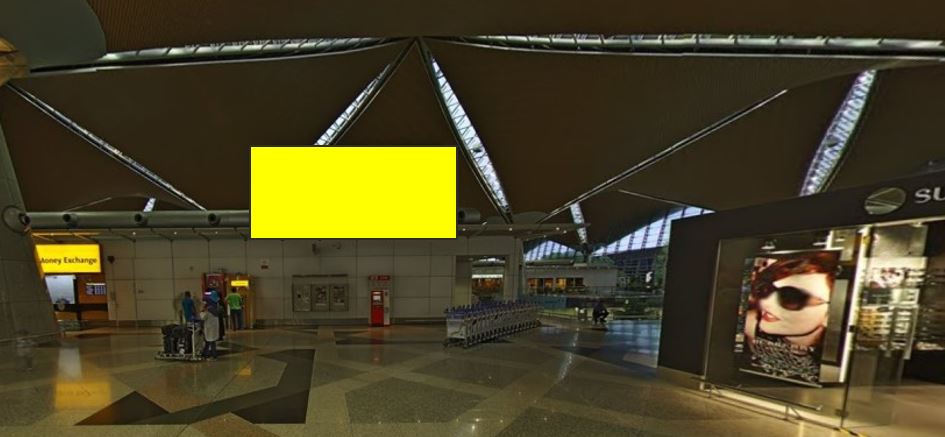
KLIA(T1) Departures Domination Icons - Departures Public Concourse
– High impact advertising opportunity.
– Strategically located above all four (4) lift shafts at KLIA check-in hall.
– Offers high visibility as it allows the brand to dominate the check-in hall. – Perfect opportunity to capture attention of all outbound travellers and
visitors.
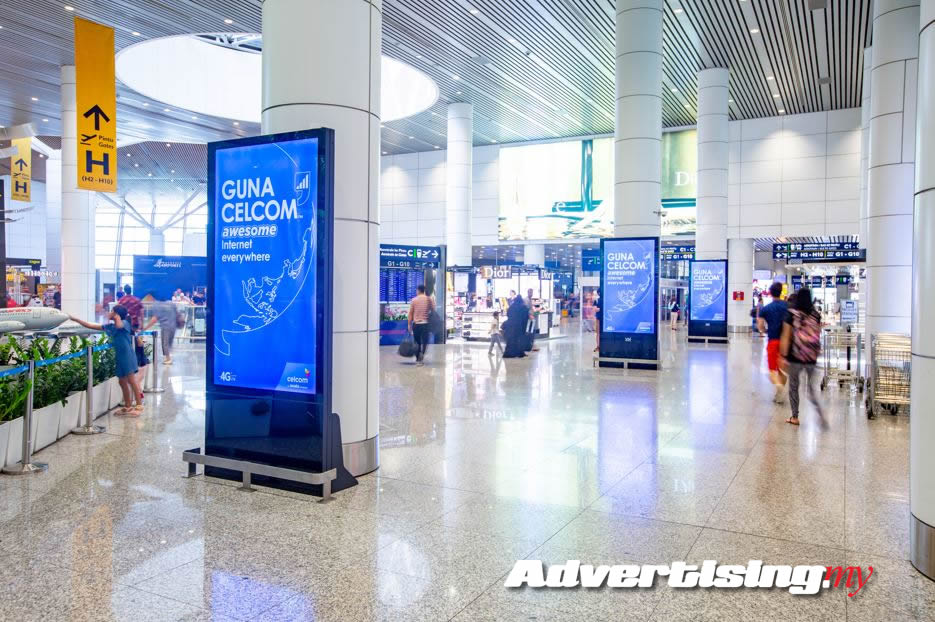
KLIA Departure Hall Advertising
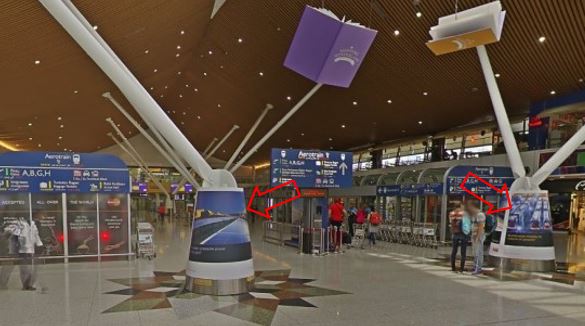
KLIA(T1) Departures Icon-International Departures Level 5
– Pair of large format backlit advertising units.
– Dominates the main thoroughfare used by passengers moving from
Check-in to Departures Immigration.
– Solus positions to ensure maximum brand exposure.
– Ideal for long-term brand communication. – Unmissable
True Effectiveness of Airport Advertising
We are the Airport Marketing Specialist
How we can help your business grow?
M Network is dedicated to enhancing airport ad spaces while ensuring brands stand out. We leverage innovation, creativity, and data to deliver impactful results.
Our commitment to sustainability and transparency guides our market-leading approach.
Kuala Lumpur International Airport
IATA: KUL • Sepang, Selangor, Malaysia • Tier 1 Premium Advertising Audience
Airport at a Glance
Terminal 1 — Main Terminal
| Terminal | KLIA Terminal 1 (Main Terminal) |
|---|---|
| IATA Code | KUL |
| Carrier Type | Full-service carriers |
| Home Airlines | Malaysia Airlines, Emirates, Qatar Airways, Singapore Airlines, Cathay Pacific |
| Audience Tier | Tier 1 Premium |
| Primary Audience | Malaysian Chinese business elite, Southeast Asian HNWI business & leisure travellers, Gulf Arab transit & inbound tourists, South Asian professional diaspora |
| Peak Advertising Season | Nov–Feb (school holidays & year-end) • Jun–Aug (summer outbound) • Hari Raya & Chinese New Year |
| Best Fit Ad Categories | Islamic finance & wealth management (HSBC, CIMB, etc), international luxury real estate, premium automotive, ultra-luxury halal hospitality & travel, premium lifestyle & fashion, international education, telcos (premium plans) |
Terminal 2 — klia2
| Terminal | KLIA Terminal 2 (klia2) |
|---|---|
| IATA Code | KUL |
| Carrier Type | Low-cost carriers (LCC) — world’s largest dedicated LCC terminal |
| Home Airlines | AirAsia, AirAsia X, Batik Air Malaysia, Scoot, Jetstar Asia, Cebu Pacific, Greater Bay Airlines |
| Audience Tier | Tier 2 — High Volume Mass Affluent |
| Primary Audience | Young Malaysian professionals, regional Southeast Asian leisure travellers, outbound Malaysian families, South & East Asian budget travellers, inbound regional tourists |
| Peak Advertising Season | School holidays • Hari Raya • Chinese New Year • Year-end peak (Dec–Jan) |
| Best Fit Ad Categories | Telcos (prepaid & postpaid plans), international education, Islamic finance & retail banking (CIMB, Maybank, etc), travel insurance, e-commerce & lifestyle apps, mid-range hospitality & travel |
Key Numbers at a Glance
60+
Airlines operating
120+
Direct destinations
92M
Passengers (2025)
55km
From city centre
$850M
Terminal 1 renovation
+32%
Projected pax growth 2026
Major Events Driving Airport Traffic
Malaysia's event calendar generates significant spikes in inbound and outbound passenger volumes through KLIA. Visit Malaysia 2026 is the government's flagship tourism initiative, targeting 35.6 million international arrivals and driving elevated traffic across all peak seasons.
MICE & Business Events
| Event | Type | Traffic Impact |
|---|---|---|
| Visit Malaysia 2026 | National tourism campaign | Target 35.6M international arrivals; sustained year-round surge across T1 & T2 |
| KLCC Convention Centre Conferences | MICE / International conferences | 6 major events 2026–2027 drawing 6,150+ delegates; aviation, global health, clean energy, women’s health sectors |
| MATTA Fair | Malaysia’s largest consumer travel fair | Drives outbound travel bookings; held at MITEC KL; spikes post-event departures from klia2 |
| Islamic Finance & Fintech Summits | Finance & banking conferences | KL is global Islamic finance hub; draws Gulf, South Asian, and Southeast Asian HNWIs via T1 |
Sports & Entertainment Events
| Event | Type | Traffic Impact |
|---|---|---|
| The Weeknd Asia Tour (Malaysia stop) | International concert | First-ever Malaysia show; drives short-stay inbound from Singapore, Indonesia, Thailand via T1 & T2 |
| K-Pop Events (IVE, BTS-related) | K-Pop concerts | Strong inbound from South Korea, Japan, Thailand; outbound Malaysian fans; elevated T2 traffic |
| Thomas & Uber Cup (Badminton) | International badminton championship | Asia-wide sports tourism; draws China, Indonesia, Japan, South Korea delegations through T1 |
| Light & Motion Putrajaya (LAMPU) | Sound & light festival | Year-end event (Dec 30–Jan 1); coincides with peak travel season; elevated arrivals via T1 & T2 |
Cultural & Religious Peak Windows
| Event | Period | Traffic Impact |
|---|---|---|
| Hari Raya Aidilfitri (Eid) | Mar–Apr (varies) | Highest single-period traffic; Gulf Arab and South Asian inbound; Malaysian outbound to Middle East |
| Chinese New Year | Jan–Feb | Outbound Malaysian Chinese to East Asia; strong inbound from China, Taiwan, Hong Kong via T1 |
| School Holiday Periods | Nov–Jan • Jun–Aug | Family outbound travel peaks; education-destination routes (Australia, UK) see full capacity |
Terminals & Facilities
KLIA operates two distinct terminals separated by a runway, connected by a dedicated express train and shuttle bus. Both terminals have undergone major upgrades ahead of Visit Malaysia 2026.
Terminal 1 — Main Terminal
The iconic main terminal was designed by Japanese architect Kisho Kurokawa and opened in 1998. It serves full-service carriers including Malaysia Airlines and major international airlines.
Terminal 1 Highlights
- Satellite building connected via Automated People Mover (APM), housing duty-free shops and premium brand boutiques
- International airline business lounges and an airside transit hotel for connecting passengers
- $850 million renovation investment underway, delivering new retail and passenger flow improvements
- 25,000 bags per hour baggage handling capacity — a 45% increase post-upgrade
- Architecture inspired by Malaysia’s rainforest canopy, with a signature forest-within-a-terminal atrium
Terminal 2 — klia2
klia2 is the world’s largest terminal dedicated to low-cost carriers, anchored by the integrated Gateway@klia2 shopping mall. It was expanded by 40% to accommodate larger aircraft and more international routes.
Terminal 2 Highlights
- Home to AirAsia, AirAsia X, Batik Air Malaysia, Scoot, Jetstar Asia, Cebu Pacific, and Greater Bay Airlines
- Gateway@klia2 integrated mall — largest airport retail complex for a low-cost terminal globally
- 16 facility improvement initiatives completed in 2025 ahead of Visit Malaysia 2026
- $120 million invested in 2026 for new F&B openings — 50 international restaurant brands added
- Duty-free shopping expanded by 35% to serve growing transit and inbound tourism demand
Premium Lounges & VIP Sections
Both terminals offer dedicated lounge facilities serving different passenger tiers. T1 carries the highest concentration of airline-branded premium lounges due to its full-service carrier profile. T2 relies primarily on Plaza Premium as its independent lounge operator.
Terminal 1 — Lounges
| Lounge | Operator / Access | Details |
|---|---|---|
| Malaysia Airlines Golden Lounge | Malaysia Airlines • oneworld partners | Flagship MH lounge at Satellite Terminal. Local Malaysian cuisine, premium seating, shower suites. Open 3 hrs before departure. Expansion negotiations underway with MAHB for larger space |
| Plaza Premium Lounge | Independent • Priority Pass • All airlines | Contact Pier, Level 2 (near Gate G). Walk-in from RM168 (2 hrs) to RM258 (10 hrs). F&B, Wi-Fi, showers, sleep pods. Priority Pass, Amex Platinum accepted |
| Plaza Premium First | Independent • Premium tier | Adjacent to Plaza Premium Lounge, Contact Pier Level 2. Smaller, quieter premium section with runway views and elevated F&B service |
| Airline Partner Lounges | Emirates, Qatar Airways, Cathay Pacific, Turkish Airlines, Korean Air | Carrier-operated lounges for business & first class passengers and frequent flyer elite tiers. Access restricted to respective airline passengers and alliance partners |
Terminal 2 — klia2 Lounges
| Lounge | Operator / Access | Details |
|---|---|---|
| Plaza Premium Lounge (Gateway Mall) | Independent • Priority Pass • All airlines | Level 2M, Gateway@klia2 Mall. F&B, Wi-Fi, showers, 24 private resting suites. Open to all travellers regardless of airline or cabin class. Amex Platinum accepted |
| Plaza Premium Lounge (Pier L) | Independent • Priority Pass • All airlines | Second location near Gate L8, International Departures. Closer to boarding gates for last-minute relaxation. Same access and facilities as Mall location |
| AirAsia Premium Red Lounge | AirAsia (discontinued) | No longer in operation. Was previously accessible to Premium Flatbed and Premium Flex passengers. Plaza Premium Lounge now serves as primary option for klia2 premium travellers |
Passenger Dwell Time by Zone
Estimates based on international airport industry benchmarks. Official KLIA zone dwell data is available upon request from Malaysia Airports Holdings Berhad (MAHB). T1 skews longer as full-service passengers arrive earlier, use lounges, and spend more time in retail.
Terminal 1 — Main Terminal
| Zone | Avg. Dwell Time | Advertiser Notes |
|---|---|---|
| Check-in & Bag Drop | 20–35 min | High footfall, stationary queues — strong for brand awareness and financial/telco ads |
| Security & Immigration | 25–40 min | Captive audience in queues — digital screens and lightboxes perform well |
| Departure Lounge & Retail | 60–90 min | Highest dwell, highest spend intent — premium for luxury, automotive, real estate, fashion |
| Gate Area | 30–45 min | Seated, relaxed, phone-active — ideal for QR-driven and education/investment campaigns |
| Arrivals Hall | 15–30 min | Inbound audience — high value for hospitality, tourism, and property brands targeting visitors |
| Total Avg. Dwell | 2.5–3.5 hrs | Full-service passenger profile — longer stay, higher spend per head |
Terminal 2 — klia2
| Zone | Avg. Dwell Time | Advertiser Notes |
|---|---|---|
| Check-in & Bag Drop | 25–45 min | High volume, self-check kiosks in use — good for telco, fintech, and travel app campaigns |
| Security & Immigration | 15–30 min | Faster processing design — shorter but consistent exposure window for digital formats |
| Departure Lounge & Gateway Mall | 45–75 min | Integrated mall drives longer retail dwell — strong for F&B, lifestyle, education, and mid-range fashion |
| Gate Area | 20–35 min | Younger, mobile-first audience — effective for app downloads, prepaid telco, and e-commerce |
| Arrivals Hall | 10–20 min | Inbound regional tourists — travel, SIM card, and hospitality brands perform strongly here |
| Total Avg. Dwell | 2–3 hrs | LCC profile — high volume, faster turnover, mass-market reach |
Connectivity & Ground Transport
KLIA ranks 4th globally for aviation connectivity. Its ground transport links are among the most developed in Southeast Asia, with a city-centre rail journey of just 30 minutes.
Rail
KLIA Ekspres
Non-stop express rail service between KLIA and KL Sentral city hub. Journey time approximately 28–30 minutes. Trains run every 15–20 minutes.
KLIA Transit
Commuter rail service stopping at intermediate stations including Salak Tinggi, Putrajaya/Cyberjaya, and Bandar Tasik Selatan. Useful for passengers connecting to the southern corridor.
Ground Access
Multiple metered taxi, e-hailing, and premium car service counters operate from arrival levels in both terminals. Pre-booked airport limos are available 24/7.
Inter-Terminal Transfer
Terminal 1 and Terminal 2 are linked by the Aerotrain shuttle (free, ~3 minutes) and coach buses. Passengers transiting between terminals should allow at least 90 minutes.
Airlines & Route Networks
KLIA connects Malaysia to over 120 direct destinations across 6 continents. T1 serves full-service long-haul carriers while T2 anchors the region’s largest low-cost network. Combined, over 60 airlines operate from KUL making it Southeast Asia’s second-busiest aviation hub.
Terminal 1 — Airlines & Key Routes
| Airline | Type | Key Routes from KUL |
|---|---|---|
| Malaysia Airlines (MH) | Full-service, national carrier | London, Amsterdam, Sydney, Melbourne, Tokyo, Osaka, Seoul, Mumbai, Delhi, Auckland, Chengdu (from Jan 2026), Maldives, Bangladesh |
| Emirates (EK) | Full-service, Gulf hub | Dubai DXB (onward connections to Europe, Africa, Americas) |
| Qatar Airways (QR) | Full-service, Gulf hub | Doha DOH (onward to Europe, Middle East, Africa, Americas) |
| Singapore Airlines (SQ) | Full-service | Singapore Changi (onward global connections) |
| Cathay Pacific (CX) | Full-service | Hong Kong HKG (onward Asia-Pacific & transatlantic) |
| Turkish Airlines (TK) | Full-service | Istanbul IST (onward Europe, Central Asia, Africa) |
| Korean Air (KE) | Full-service | Seoul Incheon ICN |
| Air France (AF) | Full-service | Paris CDG |
| Batik Air Malaysia (ID) | Full-service, regional | Jakarta, Denpasar, Surabaya, regional Southeast Asia |
| Firefly (FY) | Regional (MH Group, jets from T1 Aug 2025) | Singapore, Kota Kinabalu, Kuching, Tawau, Johor Bahru, Penang, Kota Bharu, Terengganu, Sibu, Krabi (Nov 2025), Siem Reap (Nov 2025), Cebu (Dec 2025) |
Terminal 2 — klia2 Airlines & Key Routes
| Airline | Type | Key Routes from KUL |
|---|---|---|
| AirAsia (AK) | Low-cost, regional | Bangkok, Singapore, Jakarta, Manila, Ho Chi Minh City, Colombo, Dhaka, Chennai, Kolkata, full domestic network (Kota Kinabalu, Penang, Johor Bahru, Kota Bharu, etc.) |
| AirAsia X (D7) | Long-haul low-cost | Tokyo, Osaka, Seoul, Sydney, Melbourne, Gold Coast, Perth, Istanbul (from Nov 2025), Almaty, Tashkent, Riyadh, Dammam (2026), London/Edinburgh/Paris CDG (planned 2026) |
| Scoot (TR) | Low-cost (SIA Group) | Singapore, Tokyo, Taipei, Seoul, Bangkok, Beijing, Guangzhou, Osaka |
| Jetstar Asia (3K) | Low-cost (Qantas Group) | Singapore, Darwin, regional Southeast Asia |
| Cebu Pacific (5J) | Low-cost (Philippines) | Manila, Cebu, Clark |
| Greater Bay Airlines (HB) | Low-cost (Hong Kong) | Hong Kong HKG |
Route Expansion Plans 2025–2026
Both AirAsia Group and Malaysia Aviation Group (MAG) are aggressively expanding networks ahead of Visit Malaysia 2026. KUL is adding 21 new international routes with 81 weekly services as part of the national tourism push.
AirAsia & AirAsia X
| New Route / Market | Launch | Significance |
|---|---|---|
| KUL – Istanbul (IST) | Nov 2025 (4x weekly) | AirAsia X’s return to Europe; opens gateway to Central Asian and Middle Eastern markets via Istanbul hub |
| KUL – Riyadh & Dammam | 2026 | Direct Saudi Arabia access; targets Gulf Arab inbound tourism and Malaysian Muslim outbound (Umrah) travellers |
| KUL – Almaty & Tashkent | 2026 | Opens Central Asia corridor; targets Kazakh and Uzbek inbound tourists and business travellers |
| London / Edinburgh / Paris CDG | Planned 2026 (under evaluation) | Direct European LCC routes would be transformative; targets Malaysian student market to UK and outbound leisure to Europe |
Malaysia Airlines & MAG Group
| New Route / Market | Launch | Significance |
|---|---|---|
| KUL – Chengdu (CTU) | Jan 9, 2026 (daily) | Resumes MH service to Southwest China; taps growing Chengdu business and tourism market |
| Australia & New Zealand expanded | 2025–2026 | Higher frequency to Sydney, Melbourne, Perth, Auckland; targets Malaysian student market and inbound Australian tourists |
| India expanded services | 2025–2026 | More services to Indian tier-1 & tier-2 cities; India is fastest-growing inbound market for Malaysia |
| Firefly: KUL – Krabi | Nov 17, 2025 (daily) | Opens direct leisure route to Thailand; targets outbound Malaysian holidaymakers and inbound Thai tourists |
| Firefly: KUL – Siem Reap | Nov 27, 2025 (3x weekly) | New Cambodia route; supports Visit Malaysia 2026 ASEAN connectivity agenda |
| Firefly: KUL – Cebu | Dec 2, 2025 (5x weekly) | Targets Filipino worker and tourist traffic; Philippines is a significant diaspora source market for Malaysia |
Audience Profile & Advertising Opportunity
KLIA draws one of the most commercially valuable and culturally diverse audiences in Southeast Asia. Its position as a major Gulf–Asia transit hub gives advertisers simultaneous access to multiple HNWI segments in a single environment.
Core Audience Segments
Who Travels Through KUL
- Malaysian Chinese business elite — high-frequency outbound travellers for investment, property, and education purposes
- Southeast Asian HNWI leisure & business travellers — regional connectivity makes KUL a common layover for Singapore, Bangkok, and Jakarta originating passengers
- Gulf Arab transit & inbound tourists — Malaysia’s halal-friendly positioning draws strong Gulf traffic, particularly from UAE, Saudi Arabia, and Qatar
- South Asian professional diaspora — large Indian and Bangladeshi expatriate workforce transiting to and from the Middle East and domestic Malaysian cities
- Outbound Malaysian families — education-focused families travelling to Australia, UK, and the US, with high spend on financial products and study abroad services
Best-Fit Ad Categories
Telcos
Islamic Finance
Wealth Management
Luxury Real Estate
Premium Automotive
International Education
Halal Hospitality
Luxury Travel
Premium Fashion
Peak Advertising Windows
November – February
School holidays and year-end peak period. Highest outbound family travel volume. Strong demand for education, lifestyle, and premium property advertising.
June – August
Summer outbound peak, driven by Gulf Arab arrivals and Malaysian families travelling to Europe and Australia. Premium tourism and luxury brands perform strongly.
Hari Raya (Eid)
Malaysia’s most significant travel window for domestic and Gulf-connected routes. Heightened demand for fashion, gifting, and halal-certified travel brands.
Chinese New Year
Peak season for outbound Chinese-Malaysian travel to East Asia and domestic routes. High receptivity to luxury and investment-category advertising.
Demographics & Nationalities
KLIA serves one of the most diverse passenger mixes in Southeast Asia. Inbound traffic is dominated by Singapore, China, and Indonesia, while outbound flows are driven by Malaysian Chinese, Malay Muslim, and South Asian diaspora communities.
KLIA Terminal 1 (T1) handled 63 million passengers in 2025, surpassing the pre-pandemic peak of 62 million and confirming its full recovery as a major international full-service hub.
KLIA Terminal 2 (klia2) handled 35 million passengers in 2025, driven by AirAsia group's expanding domestic and ASEAN network, including the migration of all remaining AirAsia Subang operations to T2 effective April 2025.
Top Inbound Nationalities (2025)
| Country | Arrivals | Primary Terminal & Advertiser Relevance |
|---|---|---|
| Singapore | ~2.5–3 million by air (2024); KUL–SIN ranked world’s #4 busiest international route (5.4M seats both ways); majority of SG–MY movement is by road | T1 & T2 • High disposable income; strong response to luxury, F&B, real estate, and lifestyle brands |
| China | 4.66 million (2025) | T1 (MH, CX) & T2 (AirAsia X, Scoot) • High-spend tourists; strong luxury retail and property investment appeal |
| Indonesia | 4.26 million (2025) | T2 (AirAsia) • Muslim-majority market; halal hospitality, Islamic finance, and education brands |
| Thailand | 1.64 million | T2 (AirAsia) • Leisure travellers; mid-range retail, travel, and hospitality |
| India | Growing — fastest-rising market | T1 (MH, EK, QR) & T2 (AirAsia) • Business & professional diaspora; financial services, education, automotive |
| Gulf States (UAE, Saudi, Qatar) | Significant transit & inbound volume | T1 (EK, QR) • HNWI Gulf Arab tourists; premium halal hospitality, Islamic finance, luxury real estate |
| Australia | Leisure & diaspora returnees | T1 (MH, AirAsia X) • High-spending leisure; property, education, lifestyle advertising |
Outbound Passenger Profile
| Segment | Profile | Advertiser Opportunity | Terminal |
|---|---|---|---|
| Malaysian Chinese (30% of population) | High-frequency outbound; business, property, education travel to East Asia, Australia, UK | Luxury real estate, premium automotive, wealth management, international education | T1 (MH, AirAsia X) T2 (AirAsia) |
| Malay Muslim (70% of population) | Outbound to Middle East (Umrah/Hajj), Turkey, Indonesia, UK; family-oriented travel | Halal travel, Islamic finance, telcos, fashion, education abroad | T1 & T2 |
| South Asian Diaspora (Indian, Bangladeshi) | Frequent flyers between Malaysia and South Asia/Middle East; professional worker segment | Remittance & banking, telcos, value travel, education investment | T1 (Air India, MH) T2 (AirAsia South Asia) |
| Expat & MM2H Residents | 3,172 MM2H approvals in 2025; RM3.875 billion in capital inflows; high-spend international residents | Premium real estate, luxury lifestyle, international schools, wealth management | T1 primarily |
| Leisure Travellers | Budget leisure, weekend getaways, ASEAN short-haul and domestic routes; AirAsia frequent flyers | Travel apps, e-commerce, telcos, F&B, budget accommodation, lifestyle brands | T2 primarily (AirAsia, Batik Air) |
Transit & Connecting Passengers
| Type | Details | Advertiser Opportunity | Terminal |
|---|---|---|---|
| T1 Connecting Passengers | Min connecting time 60 min within T1. Full-service airlines (Oneworld, Star Alliance, SkyTeam) interline freely. Strong hub for Gulf, European, and NE Asian connecting traffic. | Premium brands, luxury retail, financial services, international education — captive high-value audience in lounge and gate areas | T1 |
| T2 Fly Thru (AirAsia) | AirAsia operates its own Fly Thru product for intra-group connections (T2 to T2 only). Point-to-point model — no interlining with other airlines. High volume, quick turnaround. | Telcos, travel apps, e-commerce, F&B, budget lifestyle brands | T2 |
| Inter-Terminal Transfer (T1 ↔ T2) | Currently no airside connection — passengers must clear immigration, collect baggage, and re-check in. Recommended min transfer time: 3 hours (vs 45 min at Changi, 55 min at Bangkok). Seamless ITT system planned for mid-2026. | Highest dwell time segment in airport — 3+ hours captive exposure. Strong for any category including retail, F&B, hospitality, and financial services | T1 & T2 |
Outbound Migration, Education & Real Estate Investment
Malaysia’s outbound passenger profile reflects a population with strong appetite for overseas education, property investment abroad, and professional migration. These motivations translate directly into high-value advertising receptivity at the airport.
Overseas Education
| Data Point | Detail | Advertiser Relevance |
|---|---|---|
| Malaysians studying abroad | 50,000+ Malaysian students overseas (Australia, UK, Japan, China, US) | University preparation, English language courses, international school campaigns; parents are prime KLIA audience |
| Top destination: United Kingdom | UK is #1 destination for Malaysian students; declining slightly due to Ringgit weakness vs GBP | UK university advertising, student accommodation brands, financial products for education spend |
| Australia (re-emerging) | Growing again as Malaysian families favour proximity, safety, and Australian curriculum | Australian universities, real estate near campuses (Melbourne, Sydney, Perth), insurance products |
| Malaysian professional diaspora | 281,000+ degree-holders and trained professionals living in Australia, US, UK, Canada | Remittance services, investment products, cross-border banking, dual-market real estate |
Real Estate Investment Abroad
| Market | Driver | Airport Audience Relevance |
|---|---|---|
| Australia | Education-linked property; retirement destination; permanent residency pathway | Malaysian Chinese families buying near children’s universities (Melbourne, Sydney, Perth) — strong T1 audience |
| United Kingdom | Investment property near London; student accommodation investment; heritage ties | High-net-worth Malaysian travellers via T1 on MH, EK, QR — prime luxury real estate audience |
| Singapore | Cross-border investment; proximity; Singapore dollar stability | Frequent KUL–SIN flyers on T1 & T2 — Singapore property brands find a ready audience |
| Malaysia Direct Investment Abroad | RM587.4 billion total DIA position (Q4 2025) | Confirms Malaysia as significant outbound capital exporter — airport audience is decision-maker level |
Inbound Real Estate Investment to Malaysia
| Source Market | Driver | Airport Audience Relevance | Terminal |
|---|---|---|---|
| China | Largest inbound investor; Forest City (Johor), TRX (KL), BBCC; Chinese FDI >RM 10B projected 2025 | Chinese buyers transit T1 on China Southern, Air China, China Eastern; high-value property ad audience | T1 (full-service) T2 (AirAsia X) |
| Singapore | Proximity; price differential (RM vs SGD); Johor-Singapore RTS link driving demand; Forest City and Iskandar | Frequent KUL–SIN flyers; Singaporean buyers looking at JB and KL property — strong T1 & T2 audience | T1 & T2 |
| Middle East & Gulf | Halal lifestyle appeal; MM2H visa; TRX luxury residences; Islamic finance hub attraction | Gulf HNWI arriving via Emirates, Qatar Airways, Etihad at T1; prime luxury property ad audience | T1 exclusively |
| Japan & South Korea | MM2H retirement visa; warm climate; lower cost of living; growing lifestyle migration | Japanese and Korean retirees via T1 on ANA, JAL, Korean Air — luxury lifestyle and retirement property brands | T1 primarily |
| Indonesia | Cultural proximity; Ringgit advantage; halal environment; strong family and investment motivation | Indonesian buyers via T1 and T2; mid-to-premium property ad audience; strong response to halal lifestyle messaging | T1 & T2 |
2025–2026 Expansion & Growth
KLIA is undergoing its most significant transformation since opening, targeting Southeast Asia’s leading global transit hub status by 2026. Malaysia Airports Holdings Berhad is driving a multi-billion-dollar infrastructure and commercial overhaul.
Expansion Milestones
- Terminal 2 capacity expanded by 40% to handle larger aircraft and increased international frequency
- $850 million Terminal 1 renovation improving retail, lounges, baggage, and passenger experience
- Baggage handling capacity increased to 25,000 bags/hour — a 45% improvement on prior throughput
- 50 new international restaurant brands added; duty-free retail footprint expanded by 35%
- 16 facility upgrades completed at Terminal 2 in preparation for Visit Malaysia 2026
- T1 passenger projections target further growth beyond 63 million (2025) toward 70+ million by end 2026
- T2 passenger projections target 40+ million by December 2026, driven by AirAsia domestic and ASEAN expansion
Context: KLIA T1's pre-pandemic peak was 62 million passengers annually. The 2025–2026 expansion phase has already surpassed that record (T1: 63 million in 2025), with T2 adding a further 35 million passengers — bringing the combined KUL group total to approximately 98 million across both terminals in 2025.
Malaysia Economic Context & Investor Landscape
Malaysia has emerged as one of Southeast Asia's most dynamic investment destinations. The country's economic mix — oil & gas, Islamic finance, advanced manufacturing, and an accelerating digital sector — draws a sophisticated cross-section of business travellers, investors, and high-net-worth individuals through KLIA daily.
| Sector | Scale / Indicator | Advertiser Relevance at KLIA |
|---|---|---|
| Oil & Gas | PETRONAS — Fortune 500; USD 20B+ annual revenue | Upstream engineers, LNG traders, offshore services executives transit T1. Gulf and Asian energy companies use KLIA for regional HQ visits. |
| Islamic Capital Market | RM 4.3T market cap (2025); projected RM 5.8–6.3T by 2030; ranked #1 globally 13 consecutive years | Wealth managers, sukuk issuers, and Islamic fund managers from Gulf states, Brunei, and Indonesia transit T1 for Bursa Malaysia and Securities Commission meetings. |
| Manufacturing & Semiconductors | 7% of global semiconductor supply; Intel, Infineon, NXP, Bosch plants in Malaysia | Supply chain directors and procurement heads travel via T1 to Penang industrial corridor and Kulim Hi-Tech Park. |
| Digital Economy | USD 31B GMV (2024); 25.5% of GDP target end 2025; RM 163.6B record digital investments (2024) | Cyberjaya (Malaysia's tech city), MYICPARK ICT cluster, and MSC Malaysia companies generate regular C-suite and tech traveller flows through T1 and T2. |
| AI & Data Centres | 32% of SEA AI funding (H2 2024–H1 2025); 143 data centre projects approved; RM 144B total investment; 22+ data centres in Cyberjaya alone | Microsoft, Google, AWS, ByteDance, and Nvidia all have AI and data centre investments in Malaysia. ARM partnership producing chip blueprints for Malaysian companies. |
| Finance & Banking | CIMB, Maybank, RHB, AmBank — top regional banks; HSBC Malaysia a key wholesale finance hub | Private banking clients, institutional investors, and trade finance professionals passing through T1 Satellite A and Business Class lounges. |
| Real Estate & Infrastructure | Forest City (Johor), TRX (KL), BBCC; Chinese FDI >RM 10B projected 2025; Malaysia total approved investments RM 378.5B (2024 record) | HNW property buyers from China, Middle East, and Singapore enter via T1. MM2H visa holders are a growing segment at both terminals. |
| Government & Diplomacy | Malaysia is ASEAN Chair 2025; active multilateral engagement and trade diplomacy | Diplomatic missions, ministerial delegations, and ASEAN summit participants generate VIP and business class traffic through T1 Satellite B and CIP lounges. |
Advertiser opportunity: KLIA T1 premium zones — Satellite A gate areas, Business Class check-in, and Golden Lounge corridors — reach the decision-makers shaping Malaysia's capital flows, tech investments, and trade partnerships.
KLIA as a Transit Hub: Airlines, Countries & Connections
KLIA ranks 10th globally by passenger volume in 2025 (up from 13th in 2023). Its geographic position at the crossroads of East Asia, South Asia, the Middle East, and Australasia makes it one of the world's most strategically important transit hubs, serving 180+ destinations and 29.2 million international arrivals annually.
| Transit Region | Key Airlines | Countries / Airports | Terminal Section |
|---|---|---|---|
| Europe | Lufthansa, Air France, KLM, British Airways, Turkish Airlines, Finnair | Frankfurt, Paris CDG, Amsterdam, London LHR, Istanbul, Helsinki | T1 Satellite A & B (long-haul international gates) |
| Middle East & Gulf | Emirates, Qatar Airways, Etihad, Oman Air, Kuwait Airways, Saudia | Dubai, Doha, Abu Dhabi, Muscat, Kuwait City, Riyadh, Jeddah | T1 Satellite A (Gulf carriers cluster); Business & First Class priority check-in at T1 main hall |
| Northeast Asia | Malaysia Airlines, ANA, JAL, Korean Air, Cathay Pacific, China Southern, China Eastern, Air China | Tokyo, Osaka, Seoul ICN, Hong Kong, Beijing, Shanghai, Guangzhou | T1 Satellite B; T2 AirAsia X (Japan, China, Korea) |
| South Asia | Malaysia Airlines, AirAsia, Air India, IndiGo, Biman Bangladesh, SriLankan Airlines | Mumbai, Delhi, Chennai, Dhaka, Colombo, Karachi | T1 Satellite A (full-service); T2 AirAsia South Asia routes |
| Southeast Asia | Malaysia Airlines, AirAsia, Batik Air, Singapore Airlines, Thai Airways, Vietnam Airlines, Garuda, Philippine Airlines | Singapore, Bangkok, Jakarta, Bali, Manila, Ho Chi Minh, Hanoi, Yangon, Phnom Penh | T1 (full-service ASEAN); T2 (AirAsia group — 100+ ASEAN city pairs) |
| Australasia | Malaysia Airlines, Qantas (codeshare), AirAsia X | Sydney, Melbourne, Perth, Auckland, Brisbane | T1 Satellite B (Australia routes) |
Transit dwell advantage: International transit passengers at T1 spend an average of 3–5 hours in the terminal, creating premium advertising exposure windows in Satellite A & B concourses, the KLIA Transit Mall, and the international departure lounges.
Tourism Drivers — Passenger Intent at KLIA
Malaysia's tourism growth is driven by a diversified set of intent categories, each drawing distinct visitor profiles. Visit Malaysia 2026 targets 35.6 million visitors and RM 147.1 billion in tourism receipts, with KLIA as the primary international arrival gateway.
| Tourism Category | Scale & Key Facts | Top Source Countries | Ad Categories That Convert |
|---|---|---|---|
| Medical Tourism | RM 2.79B revenue (2024); 1.26M visitors Jan–Nov 2024; ranked #1 globally (Nomad Capitalist, May 2025) | Indonesia, China, India; Gulf states for halal-compliant procedures | Private hospitals (Gleneagles, Pantai, KPJ), health supplements, insurance, wellness clinics |
| Halal & Islamic Tourism | Consistently top 3 globally for Muslim-friendly travel (MasterCard–CrescentRating index) | Saudi Arabia, UAE, Kuwait, Qatar, Indonesia, Pakistan, Bangladesh | Halal F&B brands, modest fashion, Islamic finance, family accommodation, prayer facilities |
| Cultural & Festival Tourism | Hari Raya, Thaipusam, Chinese New Year, Wesak Day all generate international visitor spikes; diaspora return travel for Malaysia Day | Malaysian diaspora (UK, Australia, Singapore), regional ASEAN travellers, East Asian cultural tourists | Lifestyle brands, retail fashion, F&B, photography and tech, national airline promotions |
| Property & Investment Tourism | MM2H (Malaysia My Second Home) visa active; Forest City, TRX, Iskandar Malaysia attract buyer visits | China, GCC, Singapore HNW individuals, South Korean retirees | Real estate developers, property platforms, legal & financial advisory, international banking, luxury vehicles |
| Heritage Tourism | Penang and Melaka are UNESCO World Heritage Sites; Lenggong Valley, Batu Caves, and KLCC draw repeat visitors | Europe, Japan, Australia, South Korea, Taiwan | Heritage hotels, cultural tours, camera and travel gear, local artisan retail |
Shopping Drivers — Passenger Intent & Destination Retail
Malaysia's retail landscape is a core draw for inbound travellers. Shoppers at KLIA arrive with specific retail intentions shaped by destination awareness, price advantage, and category expertise — creating high-conversion advertising moments across both terminals.
| Shopping Destination | Offer & Appeal | Target Traveller | Ad Categories That Convert |
|---|---|---|---|
| TRX (Tun Razak Exchange) | New KL luxury retail destination; Chanel, Louis Vuitton, Dior, premium F&B, rooftop park | Gulf HNW, Chinese luxury shoppers, expats, regional affluent visitors | International luxury brands, premium F&B, lifestyle fashion, premium credit cards |
| Bukit Bintang | KL's main retail strip: Pavilion, Lot 10, Fahrenheit 88, Starhill Gallery, Berjaya Times Square. Luxury to mid-market mix. | Chinese tourists, Southeast Asian shoppers, backpackers, young professionals | Fashion, electronics, beauty and cosmetics, F&B chains, mid-market hotels |
| Langkawi | Malaysia's duty-free island: alcohol, tobacco, perfumes, chocolates, sportswear, and electronics at duty-free prices. Beach and eco-tourism backdrop. | Families, European holidaymakers, regional leisure travellers | Duty-free retail, resort hotels, outdoor and adventure brands, water sports |
| Tioman Island | ASEAN dive destination; duty-free status for selected goods, pristine reefs, eco-resort accommodation | Divers, eco-tourists, nature travellers, young international visitors | Dive equipment, outdoor gear, eco-resort brands, travel insurance |
| Johor (JB) | Johor Premium Outlets — Malaysia's busiest outlet mall; Forest City development; cross-border shopping advantage (RM vs SGD) | Singaporean overnight shoppers, Chinese property buyers, budget-conscious regional shoppers | Outlet and discount fashion, F&B, property development, vehicle rental |
| Penang | UNESCO George Town for heritage walk-shopping; Gurney Paragon for luxury; Queensbay Mall for mass retail; street food capital of Malaysia | Heritage tourists, Japanese and Taiwanese visitors, regional food enthusiasts | Heritage hospitality, boutique retail, F&B brands, artisan and craft products |
Major Traveller Nationalities at KLIA
KLIA handles 29.2 million international passengers annually (2025). The mix is dominated by five macro-nationality groups, each with distinct spend profiles and advertising receptivity.
Gulf Travellers (GCC)
Gulf nationals rank Malaysia among their top 5 global leisure destinations. Malaysia's Muslim-majority identity, halal food guarantee, and affordable luxury positioning make it a preferred family holiday and medical tourism destination. Average spend per trip exceeds USD 3,000.
| Profile | Details |
|---|---|
| Primary origins | Saudi Arabia, UAE, Kuwait, Qatar, Bahrain, Oman |
| Travel intent | Family leisure, medical tourism, Islamic finance meetings, property investment, Ramadan & Eid travel |
| Terminal used | T1 exclusively (Emirates, Qatar Airways, Etihad, Saudia, Kuwait Airways, Oman Air) |
| Spend categories | Luxury retail, halal F&B, halal hospitality, private healthcare, Islamic finance products, premium real estate |
| Advertising response | High response to Arabic-language ads, halal certification marks, luxury lifestyle imagery, and family-oriented messaging |
Chinese Travellers
China is Malaysia's largest single-country tourism source by volume. The “Xin-Ma-Tai” (Singapore-Malaysia-Thailand) multi-country itinerary is a dominant Chinese travel pattern. Tourism Malaysia targets 5 million Chinese visitors in 2025, with RM 30B in spending potential.
| Profile | Details |
|---|---|
| Primary origins | Guangdong, Fujian, Shanghai, Sichuan, Beijing; growing numbers from Tier 2 and Tier 3 cities |
| Travel intent | Multi-country ASEAN itineraries, property investment, medical tourism, shopping, Chinese New Year travel |
| Terminal used | T1 (China Southern, China Eastern, Air China, Cathay Pacific); T2 (AirAsia X to Guangzhou, Chengdu, Wuhan) |
| Spend categories | Duty-free, cosmetics, fashion, electronics, real estate, local food experiences |
| Advertising response | Mandarin-language creative performs strongly; QR code integration for WeChat/Alipay; brand trust signals essential |
Indian Travellers
India is among Malaysia's fastest-growing inbound markets, driven by visa liberalisation, direct flight expansion, and Malaysia's large Tamil and Malayali diaspora. Medical tourism from India is a high-value segment.
| Profile | Details |
|---|---|
| Primary origins | Tamil Nadu, Kerala, Maharashtra, Delhi; NRI communities returning to Malaysia |
| Travel intent | Medical tourism, cultural festivals (Thaipusam), diaspora visits, IT and finance business travel, education scouting |
| Terminal used | T1 (Air India, Malaysia Airlines, IndiGo); T2 (AirAsia South India routes) |
| Spend categories | Private healthcare, Indian-Muslim F&B, gold jewellery, electronics, IT education, remittance services |
| Advertising response | Tamil and Malayalam bilingual creative drives response; value-for-money messaging resonates; family and community trust signals strong |
Singaporean Travellers
Singaporeans are Malaysia's most frequent leisure visitors. The Malaysian Ringgit's favourable exchange rate makes Malaysia a premier value-shopping destination. Face-to-face Singaporean card spending in Malaysia rose 18% YoY during peak seasons, with jewellery purchases up 220%+.
| Profile | Details |
|---|---|
| Travel intent | Weekend getaways, F&B and shopping (Johor, KL, Penang), food holidays, major events, Ipoh day trips, heritage travel |
| Terminal used | T2 (AirAsia SIN-KUL); T1 (Singapore Airlines, Malaysia Airlines codeshares) |
| Spend categories | Food and restaurants (61% of travel budget), shopping, jewellery, electronics, health and beauty |
| Advertising response | English and Mandarin bilingual; price-led and experience-led messaging both convert; mobile-first and social-proof oriented |
Western & European Travellers
European and Western visitors arrive via long-haul routes at T1. They tend to have longer average stays, higher per-night hotel spend, and strong interest in eco-tourism, heritage, and culinary experiences. Planning horizon is typically 3–6 months ahead.
| Profile | Details |
|---|---|
| Primary origins | UK, Germany, France, Netherlands, Australia, USA, Canada, Scandinavia |
| Travel intent | Multi-country Southeast Asia itineraries, eco-tourism (Borneo, Taman Negara), heritage (Penang, Melaka), business, dive holidays |
| Terminal used | T1 exclusively (Lufthansa, Air France, KLM, British Airways, Malaysia Airlines Oneworld) |
| Spend categories | Adventure travel, eco-resort bookings, heritage tours, photography equipment, local artisan goods, premium dining |
| Advertising response | English-language; sustainability and authenticity themes convert; internationally recognised brand logos and certifications matter |
Outbound Profiles — Education, Migration & Real Estate
KLIA is the primary departure point for Malaysia's growing outbound travel segments. These passengers are making long-term decisions around education, migration, and property — representing premium advertising targets at the point of departure.
Education Outbound: Australia > UK > USA
Malaysian students are among Southeast Asia's highest-volume education exporters. Students depart multiple times per year (enrollment, semester breaks, graduation). Parents frequently accompany, doubling the advertising audience.
| Destination | Student Profile | High-Converting Ad Categories |
|---|---|---|
| Australia (Top) | UoM, ANU, Monash, UNSW students; post-study work visa holders; permanent residency pathway seekers | International bank accounts, student accommodation, travel insurance, mobile roaming, laptops, migration advisory |
| United Kingdom | Russell Group universities (LSE, Imperial, UCL, Warwick); Commonwealth scholarship holders; Graduate Route visa users | Foreign exchange services, luggage brands, premium clothing for cold weather, property rental apps |
| United States | Ivy League and state university students; STEM and business majors; F-1 visa holders from upper-income families | Premium banking, tech gadgets, US health insurance, high-value luggage, migration advisory |
Migration Outbound
| Category | Details |
|---|---|
| Top destination countries | Australia, UK, Canada, Singapore, New Zealand, UAE; Taiwan and Japan growing for skilled workers |
| Migrant profile | Chinese-Malaysian professionals (IT, medicine, finance); Indian-Malaysian engineers and doctors; HNW families seeking residency by investment programs |
| Advertiser opportunity | International remittance services, offshore banking, destination country property, migration legal advisory, international health insurance, global schooling platforms |
Real Estate Outbound Investors
| Category | Details |
|---|---|
| Target markets | Melbourne, Sydney, London, Tokyo, Osaka, Dubai — all accessible direct or one-stop from T1 |
| Buyer profile | Malaysian Chinese business owners, professionals with AUS/UK PR or citizenship, retirees with FD portfolios seeking overseas yield |
| Advertising categories | Overseas property portals, international mortgage advisory, offshore private banking, migration visa services, concierge relocation services |
F&B & Eateries — KLIA T1 vs. KLIA T2
Food and beverage is a primary dwell activity at both terminals. The two terminals have distinct F&B personalities reflecting their different passenger profiles. Many locals and domestic travellers deliberately choose KLIA T2 over T1 specifically for its more diverse, affordable, and authentic local food scene.
| Category | KLIA Terminal 1 (T1) | KLIA Terminal 2 (klia2) |
|---|---|---|
| F&B Character | Premium international brands, celebrity chef outlets, curated fine dining experiences | 300+ varieties — Western, Asian, and Arabic; budget to mid-market; preferred by locals for authenticity and value |
| Signature Outlets | Jamie Oliver's (Jamie's Deli); Din Tai Fung ("Din by Din", first airport outlet); KyoChon (first airport location); Kitchen by OpenHouse (endangered Malaysian recipes, partnership with Jabatan Warisan Negara) | Food District kopitiam; Costa Coffee (Malaysia's first airport Costa outlet); AirAsia Cafe; Secret Recipe; OldTown White Coffee; nasi lemak and roti canai stalls |
| Local Food Diversity | Limited authentic local options; skewed toward global brands and tourist-facing menus | Significantly broader. Nasi lemak, char kway teow, bak kut teh, laksa, roti canai, dim sum, mamak stalls — all available. Locals specifically choose T2 for the better local food scene. |
| Price Range | RM 25–RM 80+ per meal | RM 8–RM 35 per meal; kopitiam breakfast under RM 10 |
| Halal Status | All public outlets halal-certified; non-halal items at duty-free retail only | All public outlets halal-certified or Muslim-friendly; extensive choice for Gulf and Indonesian Muslim travellers |
| F&B Advertising Audience | International business travellers, luxury-segment tourists, premium cabin passengers, long-haul transit passengers with high dwell time | Local Malaysians, budget travellers, high-volume regional visitors, AirAsia frequent flyers — highly receptive to F&B brand advertising |
Domestic Connectivity — Traveller Profiles, Airports & Route Intent
Malaysia's domestic aviation market is large and growing, driven by the geographic reality of a country split across a peninsula and two large Borneo states. KLIA T2 is now the dominant domestic hub — a status reinforced by AirAsia's full migration away from Subang Skypark effective April 7, 2025.
Why KLIA T2 and Not Subang Skypark?
| Factor | Detail |
|---|---|
| Capacity & Growth | +16% YoY passenger growth on Kota Kinabalu and Kuching routes outgrew Subang's infrastructure ceiling |
| Infrastructure | KLIA T2 handles wide-body aircraft and larger passenger volumes; Subang is limited to narrow-body turboprops |
| International Connections | Domestic passengers at T2 can connect directly to AirAsia's 100+ ASEAN routes — impossible at Subang |
| Subang Redevelopment | Sultan Abdul Aziz Shah Airport (SZB) is being redeveloped for MRO and tech hub use. Now only Batik Air and Firefly turboprops operate there commercially. |
Key Domestic Routes at KLIA T2
| Route | Code | Traveller Profile | Travel Intent |
|---|---|---|---|
| KL → Kota Kinabalu | BKI | Sabahan workers returning home; dive and nature tourists; oil and gas executives | Family visits, leisure, offshore work commutes, Kinabalu climbing |
| KL → Kuching | KCH | Sarawakian workforce, family groups, government officials, Borneo eco-tourists | Home visits, business (Sarawak state-linked companies), Borneo wildlife tourism |
| KL → Penang | PEN | Food tourists, tech professionals (Penang semiconductor corridor), family travellers | Gastronomic tourism, factory visits, heritage sightseeing |
| KL → Langkawi | LGK | Family beach holidaymakers, duty-free shoppers, honeymoon travellers | Beach leisure, duty-free retail, adventure, eco-resort stays |
| KL → Johor Bahru | JHB | Johor-based professionals, property investors, Singapore-bound day-trippers | Business (Iskandar Malaysia), cross-border commerce, property site visits |
Disallowed Advertising Categories at KLIA
Advertising at KLIA and KLIA T2 is governed by MAHB policies, the Malaysian Code of Advertising Practice (ASA Malaysia), and applicable Malaysian law. The following categories are prohibited or restricted across all terminal advertising placements.
| Category | Status | Notes |
|---|---|---|
| Alcohol & Alcoholic Beverages | Not Allowed | Prohibited in public terminal advertising at T1 and T2. Duty-free alcohol is sold at Langkawi Airport but is not publicly advertised in KLIA terminal media. |
| Tobacco & Cigarettes | Not Allowed | Prohibited under Malaysian law (Control of Tobacco Product Regulations). No cigarette or tobacco brand advertising in airports or any public space in Malaysia. |
| Gambling & Betting | Not Allowed | Online and physical gambling advertising not permitted in Malaysian public spaces. Sports betting and casino advertising (including overseas operators) is disallowed. |
| Vape & E-Cigarettes | Not Allowed | Prohibited under the Control of Smoking Products for Public Health Act 2023 (effective 2024). |
| Political Content | Not Allowed | Political party advertising, campaign materials, and divisive content are not accepted in airport media inventory. |
| Religiously Sensitive Content | Not Allowed | Malaysia is a Muslim-majority country. Content that contradicts Islamic values, depicts religious symbols inappropriately, or could cause communal offence is disallowed under MAHB guidelines and Malaysian law. |
| Pharmaceutical / Health Products (uncleared) | Requires KKM Approval | Pharmaceutical products and regulated health claims require pre-clearance from KKM / Medicines Advertisement Board before placement. See Authority Approvals section below. |
Authority Approvals for Airport Advertising at KLIA
Placing advertising at KLIA and KLIA T2 requires understanding which approvals are mandatory, which are category-specific, and which are not required.
| Authority | Approval Required? | Applicable Categories & Notes |
|---|---|---|
| MAHB Malaysia Airports Holdings Berhad |
Required — All Categories | MAHB approval is mandatory for all advertising placements at KLIA T1 and T2 regardless of category. Creative must be submitted for content review. Standard review is 5–10 business days. Booking, creative approval, and installation are all managed through the MAHB media channel. |
| KKM Kementerian Kesihatan Malaysia |
Required — Medical Category Only | KKM approval is required for healthcare, pharmaceutical, and medical product advertising. Includes private hospitals, health supplements making regulated claims, medical devices, and pharmaceutical brands. Clearance is issued through the Medicines Advertisement Board (MAB) under the Medicines (Advertisement and Sale) Act 1956. Advertisers must present KKM/MAB approval alongside MAHB submission. |
| DBP Dewan Bahasa dan Pustaka |
Not Required | DBP approval is not required for airport advertising at KLIA. DBP oversees Bahasa Malaysia usage in certain statutory contexts, but airport advertising is not within its mandatory approval scope. DBP sign-off is not a gatekeeping requirement for KLIA ad placements. |
| ASA Malaysia Advertising Standards Authority |
Advisory (Self-Regulatory) | ASA Malaysia administers the Malaysian Code of Advertising Practice. Compliance is expected but ASA does not issue pre-clearance approvals. Breaches can result in public reprimand and required withdrawal of the advertisement. |
Australia Airports Premier Advertising Network
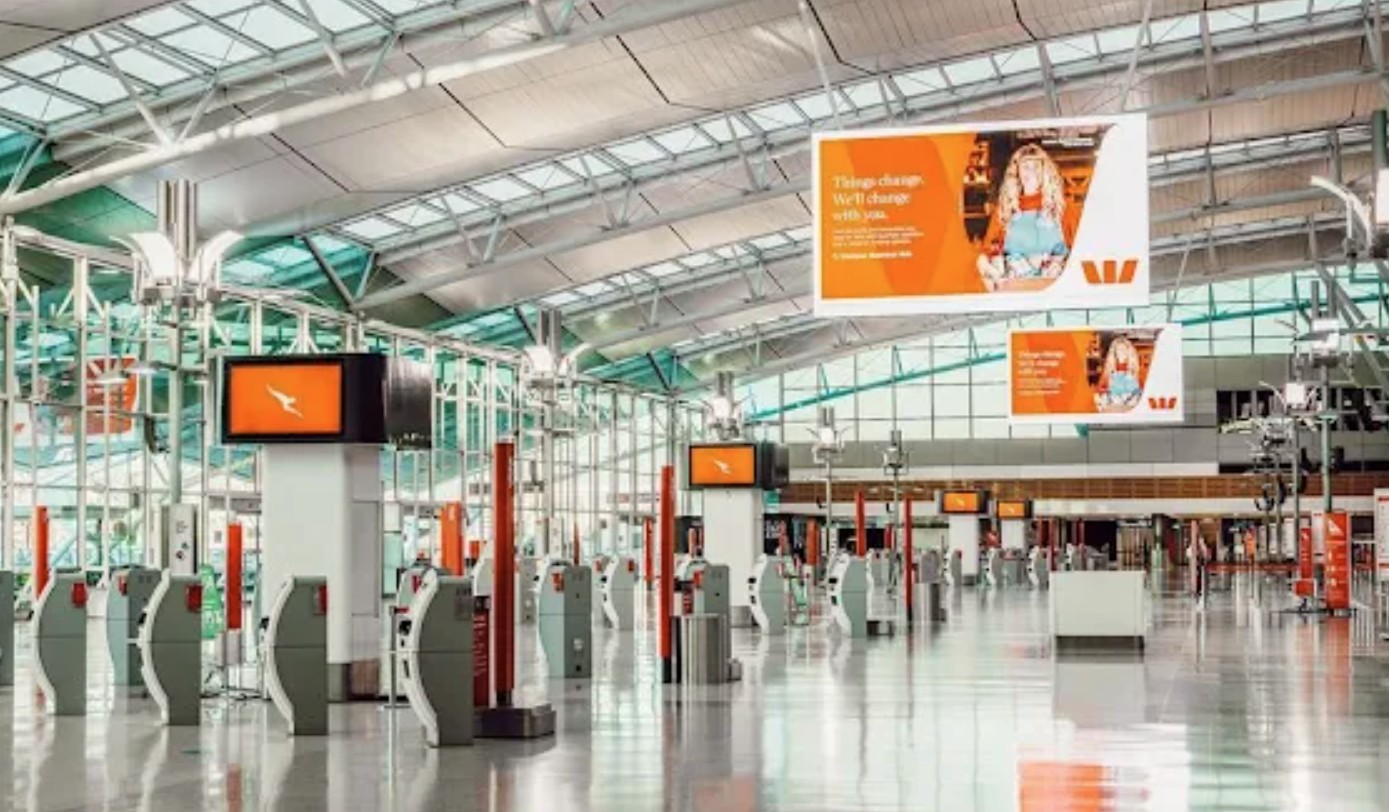
Sydney Airport Advertising
Sydney Airport handles 9 million passengers annually establishing it as Australia’s busiest aviation hub. The airport attracts affluent business professionals, international visitors, and premium leisure travellers. Exceptional audience reach across diverse demographic segments creates unmatched advertising opportunities for brands nationwide.
Advertising at Sydney captures premium international audiences with exceptional purchasing power. Strategic placement positions brands before affluent global travellers making luxury and premium service purchasing decisions.
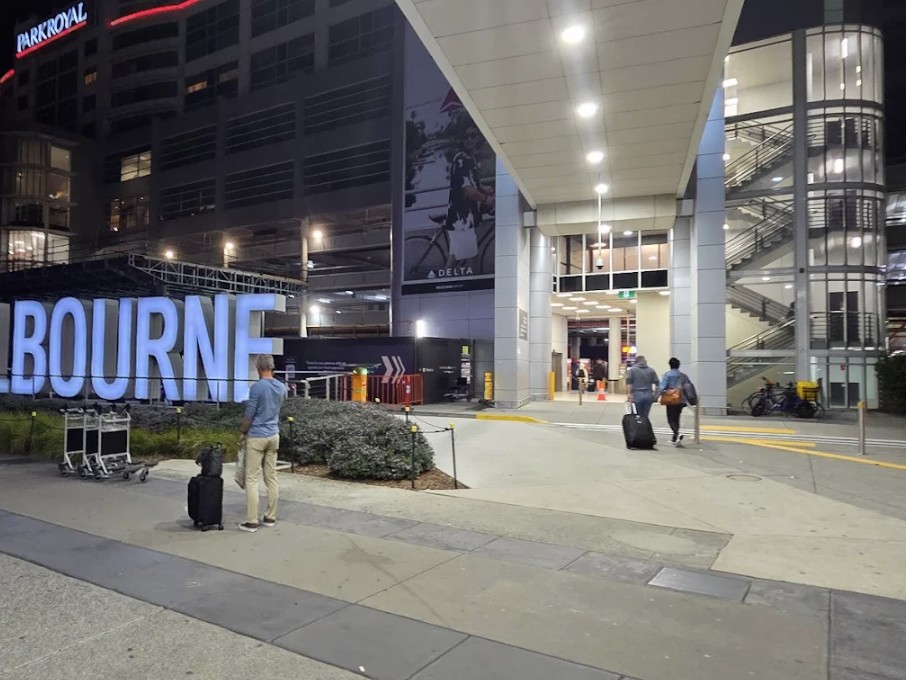
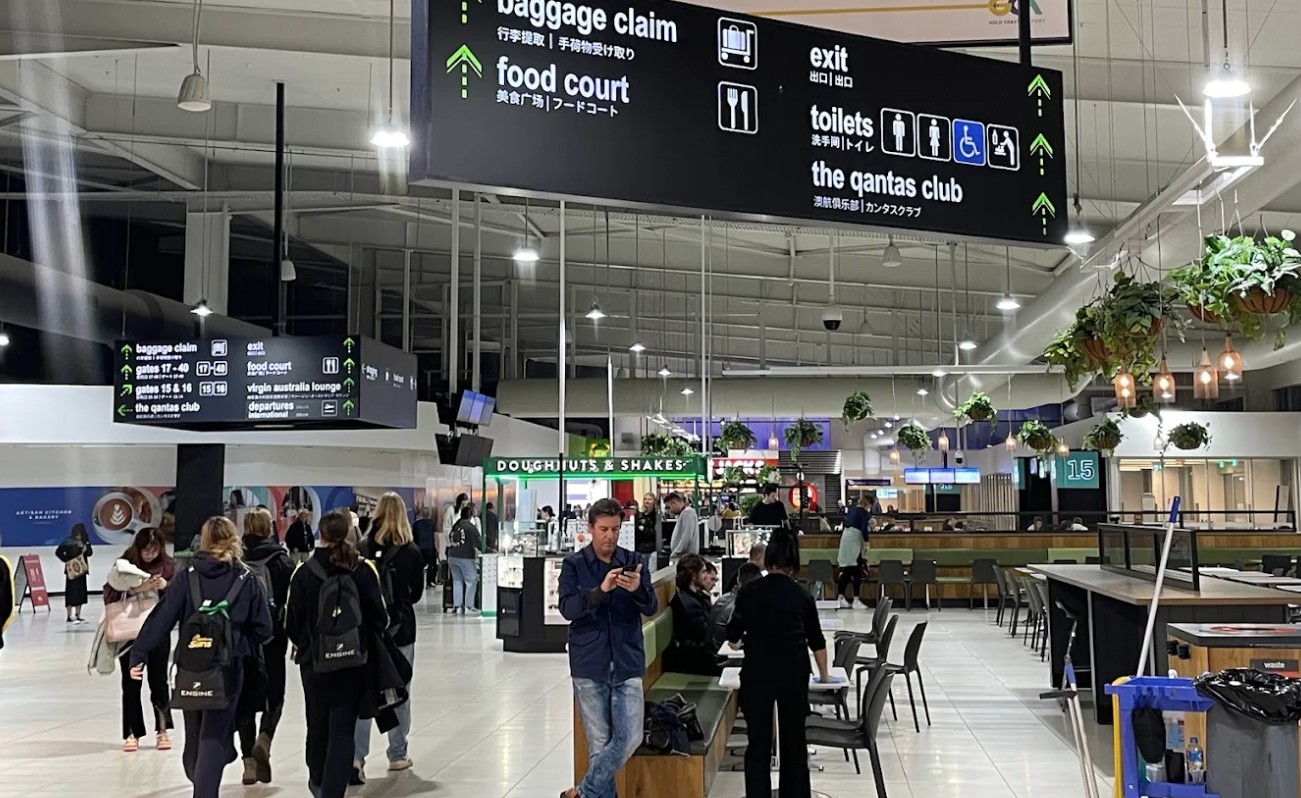
Melbourne Airport Advertising
Formats:
Digital landscape | 15 sec
Longreach | 2732 x 768px (7s)
Digital Landmark | 18.55 x 5.32m (10s)
Enterprise | 2732 x 768px (7s)
Qantas Club| 2732 x 768px (7s)
Melbourne Airport handles 35 million passengers annually establishing it as Australia’s second busiest aviation facility. The airport attracts strong business traveller presence with affluent professional demographics. Premium positioning creates ideal conditions for sophisticated brand advertising targeting corporate decision-makers and executives effectively.
Advertising at Melbourne reaches concentrated business audiences during peak corporate travel periods. Strategic placements capture high-value professionals making purchasing decisions for premium services and corporate solutions effectively.
Gold Coast Airport Advertising
Gold Coast Airport processes over 7 million passengers annually establishing it as Australia’s premier leisure gateway. Located near Surfers Paradise, it attracts affluent resort-seeking travellers and holiday visitors. The airport’s island destination positioning creates perfect alignment for premium hospitality advertising.
Passengers demonstrate exceptional spending intent for exclusive experiences, water sports, and premium dining.
Strategic advertising showcasing luxury resorts, entertainment venues, and island activities inspires immediate booking decisions among arriving leisure travellers seeking memorable vacation experiences.
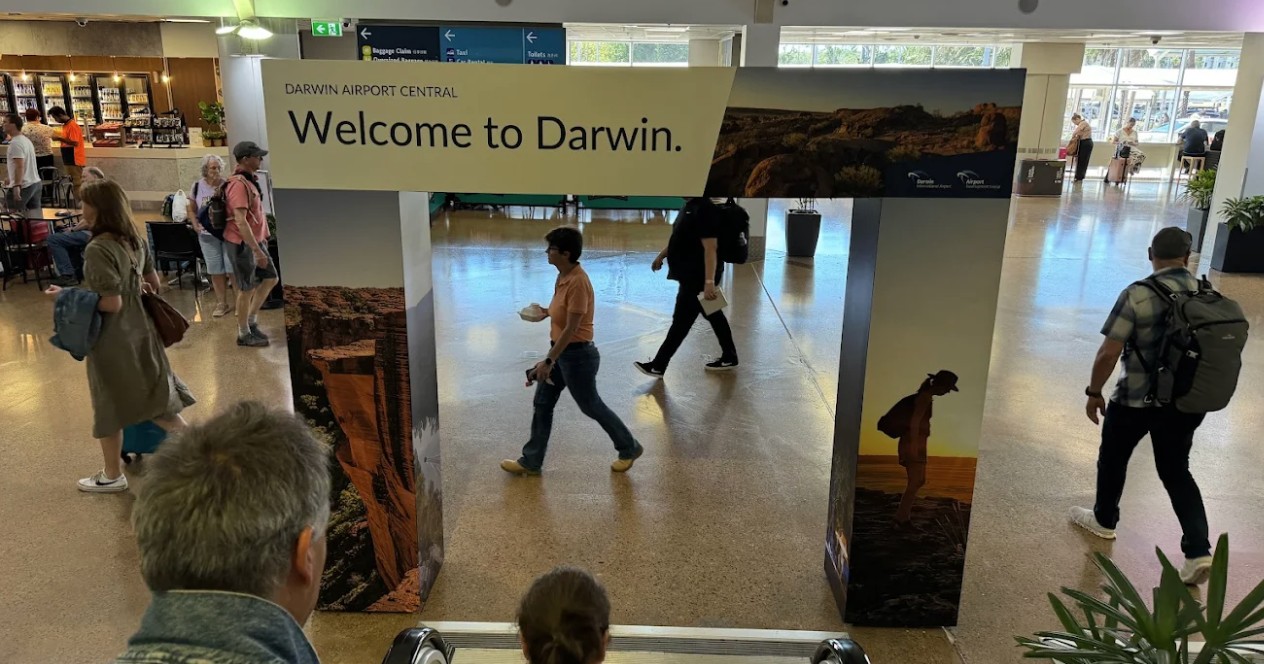
Darwin Airport Advertising
Formats:
Boulevard | 2732 x 768px (7s)
Enterprise | 2732 x 768px (7s)
Touchdown | 2732 x 768px (7s)
Collect & Connect TV | CC TV15
Darwin Airport serves approximately 2 million passengers annually establishing it as Northern Territory’s primary gateway. The airport attracts mining and resource sector professionals representing high-value decision-makers. Regional business development focus creates unique B2B advertising opportunities for corporate and industrial brands.
Advertising at Darwin targets resource sector professionals with substantial purchasing authority and budgets. Strategic positioning captures high-earning professionals making business decisions during regional travel periods.
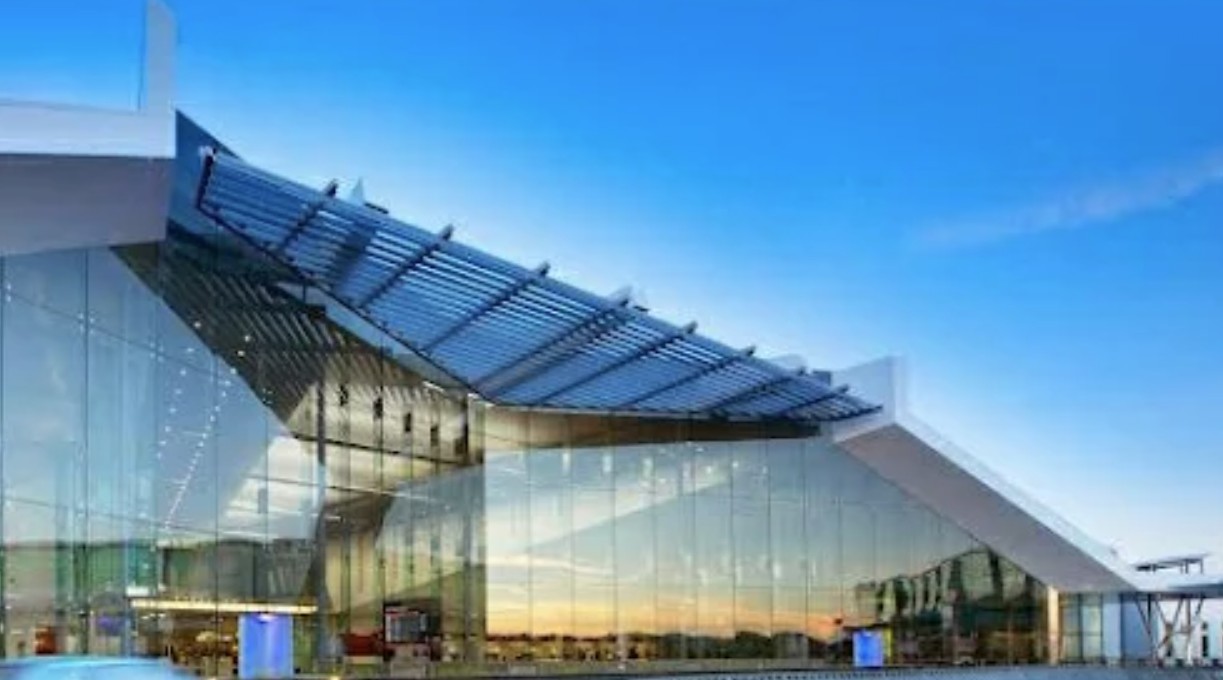
Gold Coast Airport Advertising
Gold Coast Airport processes over 7 million passengers annually establishing it as Australia’s premier leisure gateway. Located near Surfers Paradise, it attracts affluent resort-seeking travellers and holiday visitors. The airport’s island destination positioning creates perfect alignment for premium hospitality advertising.
Passengers demonstrate exceptional spending intent for exclusive experiences, water sports, and premium dining.
Strategic advertising showcasing luxury resorts, entertainment venues, and island activities inspires immediate booking decisions among arriving leisure travellers seeking memorable vacation experiences.
Canberra Airport Advertising
Canberra Airport
Canberra Airport serves approximately 3 million passengers annually establishing it as Australia’s capital city gateway. The airport attracts government professionals, business travellers, and political sector workers. Professional demographics create unique opportunities for corporate services and B2B advertising targeting decision-making audiences.
Advertising at Canberra targets government and professional sectors with decision-making authority. Strategic placement captures high-value professionals making business purchasing decisions during capital city travel.
Adelaide Airport Advertising
Adelaide Airport
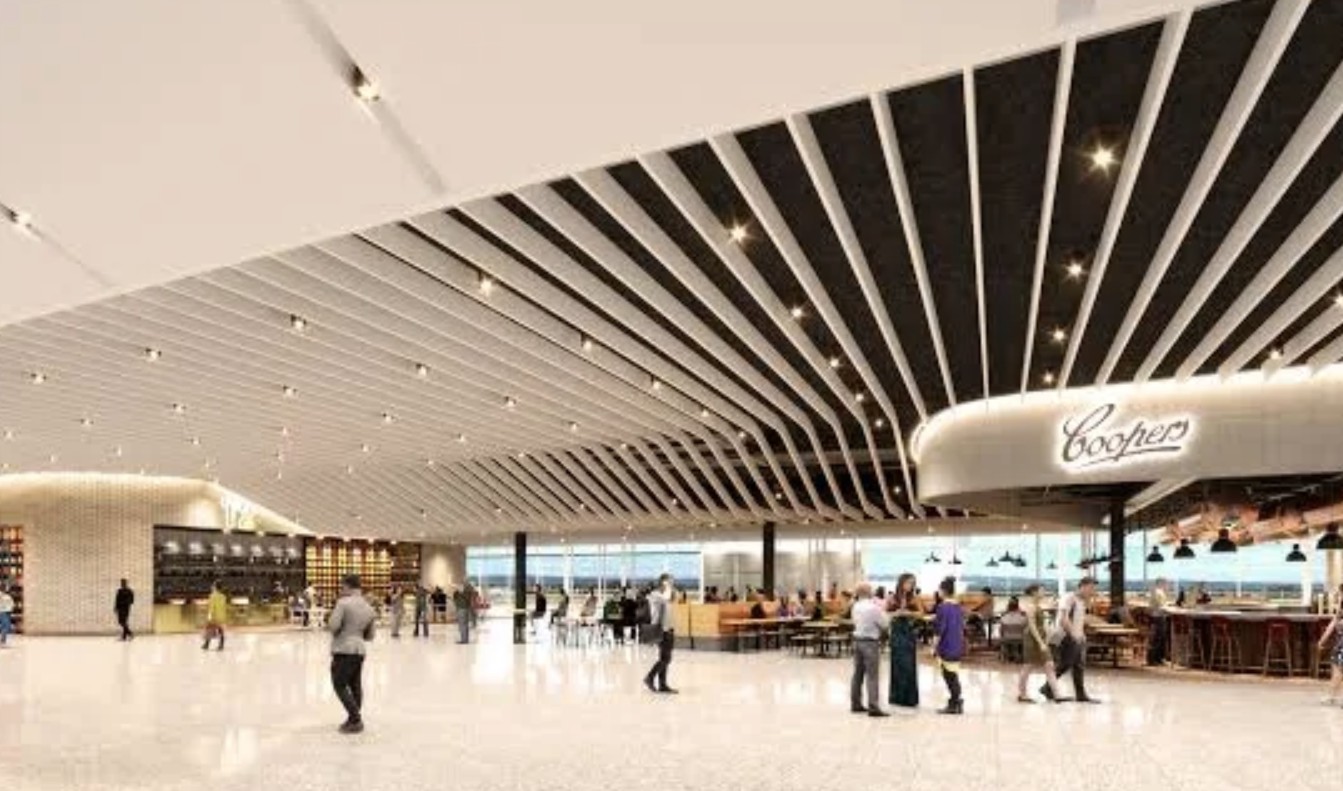
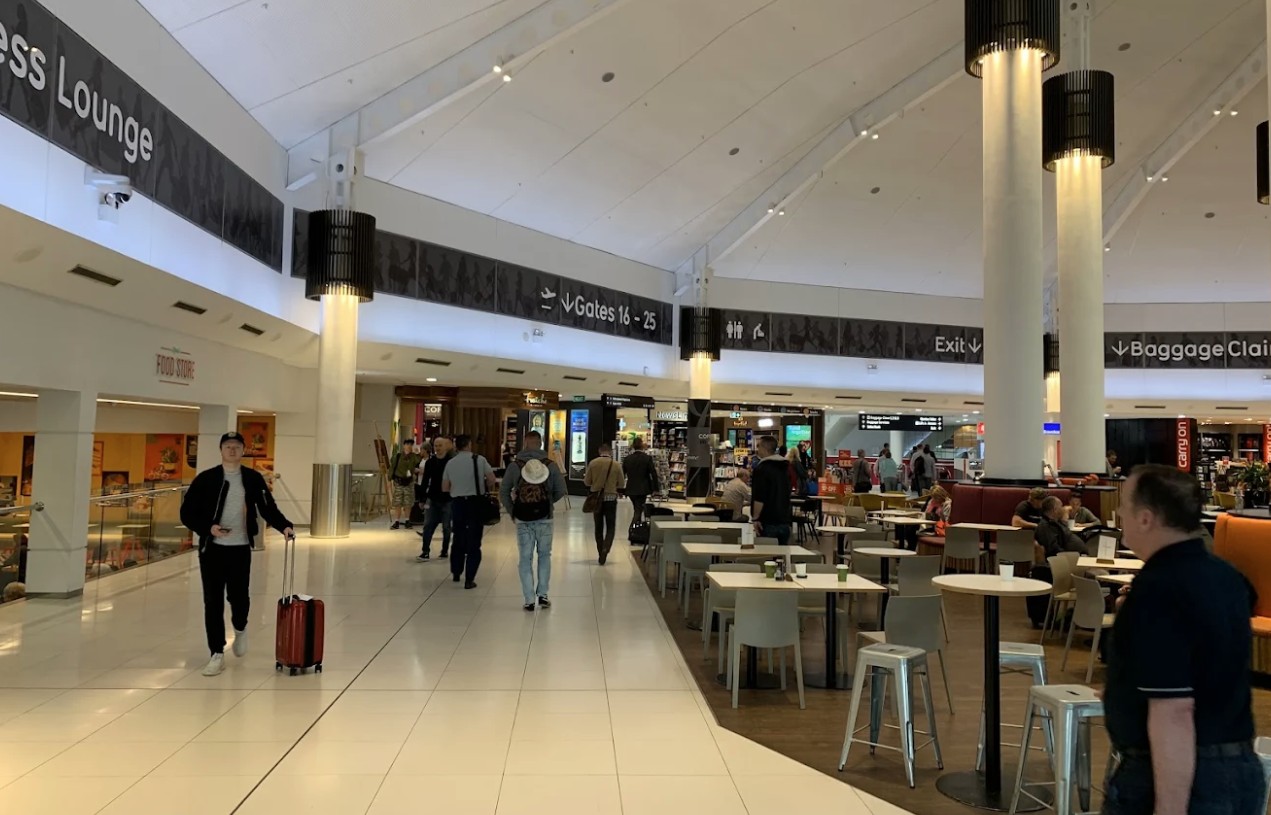
Adelaide Airport handles approximately 8 million passengers annually establishing it as South Australia’s primary aviation hub. The airport attracts business professionals, leisure travellers, and regional visitors. Growing international connectivity creates expanding advertising opportunities for brands seeking Adelaide market penetration and regional audience access.
Advertising at Adelaide reaches diverse business and leisure audiences effectively. Strategic positioning captures professionals and holiday travellers making purchasing decisions during airport transit periods.
Perth Airport Advertising
Perth Airport serves approximately 8 million passengers annually establishing it as Western Australia’s primary aviation hub. The airport attracts business travellers from Singapore region, leisure visitors, and affluent professionals. Geographic isolation and premium passenger demographics create strategic value for businesses targeting cross-border commerce and regional professional services.
Advertising at Perth reaches cross-border professional audiences with substantial purchasing authority. Strategic positioning captures high-earning business professionals making corporate purchasing decisions during regional travel periods.
Brisbane Airport Advertising
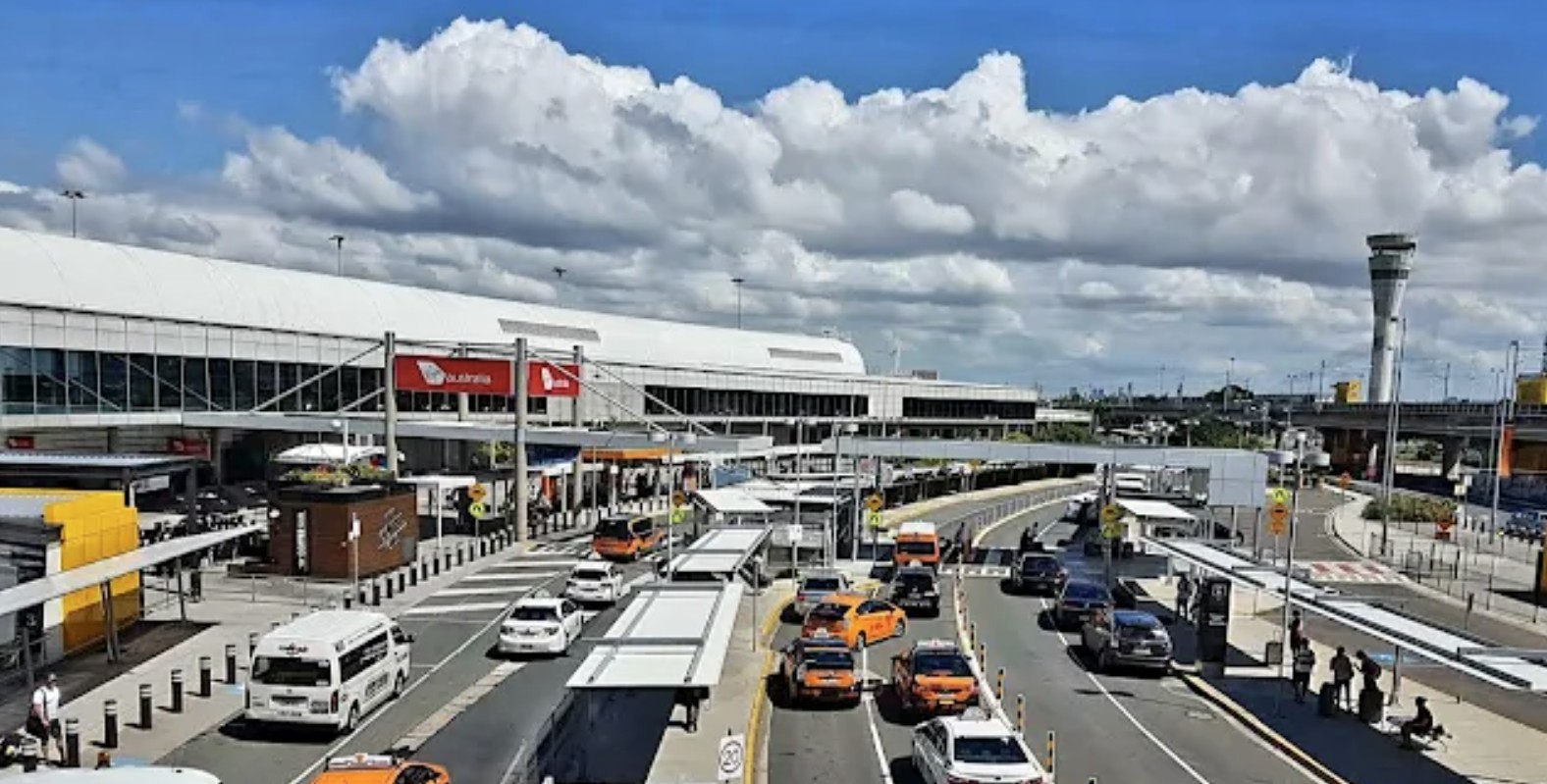
Brisbane Airport processes 4 million passengers annually establishing it as Queensland’s major aviation gateway. The airport attracts leisure travellers, business professionals, and growing international visitor volumes. Leisure travel dominance makes tourism, hospitality, and entertainment advertising particularly effective reaching experience-seeking audiences actively planning holiday bookings.
Advertising at Brisbane reaches pre-purchase leisure audiences actively booking holidays and premium experiences. Strategic positioning captures travellers seeking tourism information inspiring immediate destination and resort booking decisions.
Simple steps ON
How to Launch an Airport Advertising Campaign in Malaysia Airports
1
Identify Your Target Audience & Terminal
Study the passenger profile of each terminal before committing to a placement. International terminals deliver high-spending inbound visitors. Domestic terminals capture Australia’s most frequent business flyers.
2
Choose Your Format, Timeline & Budget
Running a short burst campaign? Digital screens offer instant activation and content flexibility. Building long-term brand presence? Static placements give you exclusive ownership at a lower ongoing cost.
Ask us for traffic volume and impression benchmarks for your shortlisted sites. We will hold your preferred slot for a cooling period while you confirm your plans.
3
Lock In Your Slot & Get a Formal Quote
You have 1-3 days from reservation to confirm your booking. Once confirmed, we issue a formal quote covering placement details, campaign schedule, and full pricing breakdown.
4
Settle Your Deposit or Sign to Confirm
Finalise your booking by submitting a deposit payment or signing our official quote. Your placement, agreed rate, and campaign window are all secured from this point forward.
5
Provide Artwork & Clear Authority Approval
Get the required artwork specifications from us before briefing your creative team. DBP is not required. Airport authority sign-off typically takes 3 to 5 business days — plan your production timeline accordingly.
Go Live & Track Your Results
Your campaign activates on the agreed date. Report will be sent within 3 days upon campaign commencement.
Let’s get your campaign moving
Reach out to check site availability, request impression data, and secure your slot today.
Real Reviews from the Advertising Industry

Ready to Make Your Brand Unmissable?
Result-Driven and Impactful Marketing
We have been in the market long enough to know what our customers need, especially for tourism campaigns. Stemming from ideation to brand impact and enhancing customers’ loyalty, we have the skills and the right people to engage in marketing strategies that not only work but produce the results you desire.
Get a FREE QUOTE now.
We are available 247!
Get in contact with one of our representatives today.